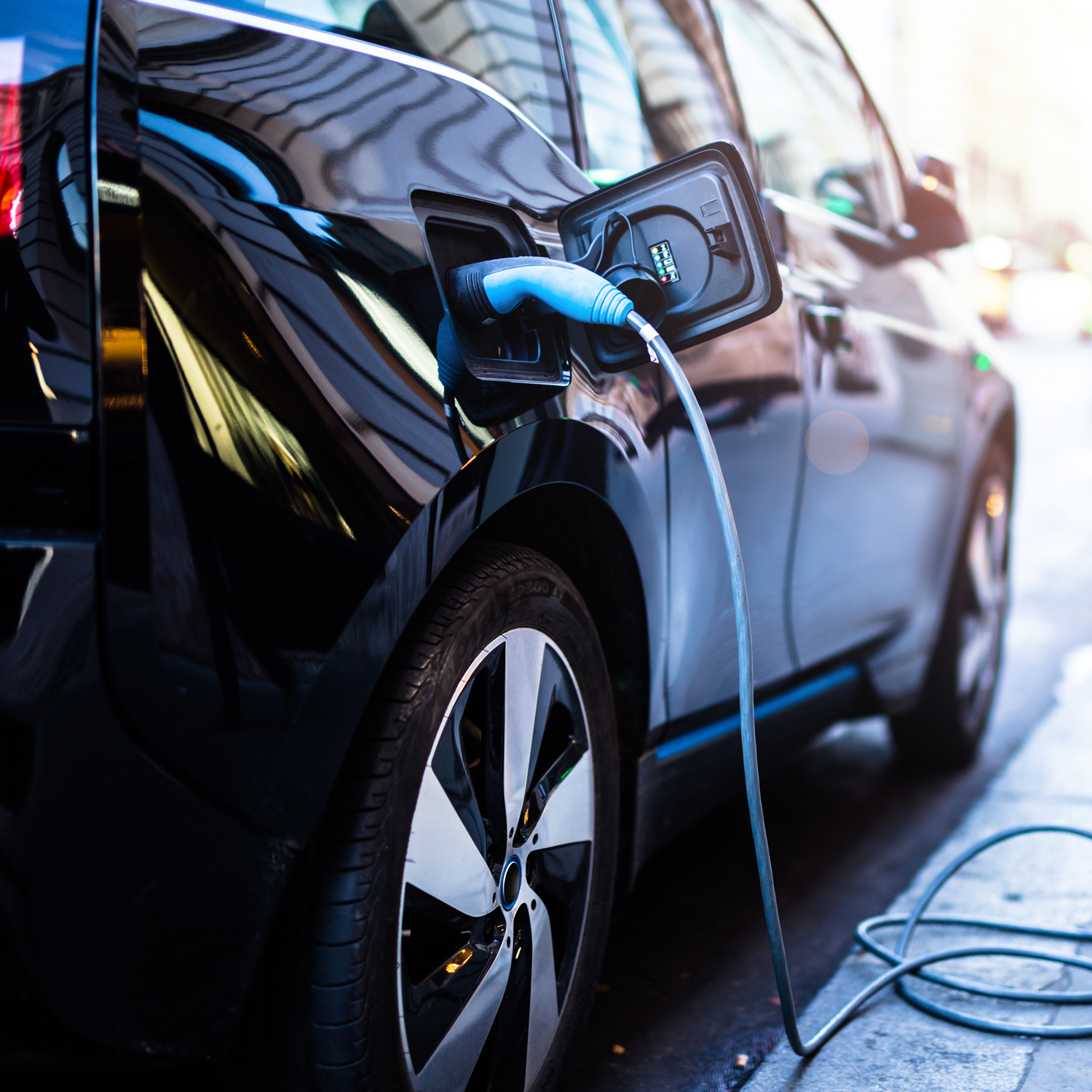
There are three charging speed methods when your EV is plugged into a home charger or a power source:
Slow charging (3-6kW) – AC
Referred to as “trickle charging,” this method involves plugging into an electric car and charging the AC mains using a setup similar to charging your phone or laptop. This involves connecting to your EV using the standard 3-pin plug, also known as an untethered connection.
Slow charging is commonly used for overnight EV charging at home, where speed is not a critical factor. Depending on your EV model and battery size, it may take 6-12 hours to fully charge your battery.
You can also opt for slow-charging EV-specific terminals that come with their cable (Tethered) for installation, and you may qualify for an EVCG government grant to facilitate the installation.
These slow-charging installations are cost-effective, utilizing the car’s current inverter to convert the AC from the mains into the DC required by your battery.
Fast charging (7-22kW) – AC
More efficient utilization of AC power, fast charging typically requires 1-6 hours to charge an EV completely and stands as the most prevalent form of public charge point, striking a balance between installation cost and performance.
Fast charge points usually include their cable (tethered) and feature a Type-1 or Type-2 socket for connecting to your car or EV terminal.
Rapid charging (43-100+kW) – DC
Rapid charge points are commonly found near motorways and main roads, primarily designed to facilitate long-distance journeys and alleviate the well-known ‘range anxiety.’
Equipped with their own built-in AC-DC inverter, these points can rapidly charge the battery directly, surpassing the limitations of an EV’s smaller inverter.
EVs can typically reach an 80% charge in 30-45 minutes, prompting drivers to take a brief break to fuel up before resuming their journey. Charging times for reaching 80% are usually specified for these installations, as charging speeds significantly decrease during the final 20%.
These specialized home charging stations always come with a tethered CCS or ChaDeMO socket, allowing for DC charging.
What connectors are available?
Similar to the challenges faced with laptop and mobile connectors, electric vehicles (EVs) also grapple with diverse connector choices among manufacturers, aligning with three primary categories: the Asian, European, and Tesla connector standards.
Asian-made vehicles often support Type-1 (AC) and CHAdeMO (DC) sockets, whereas European vehicles commonly utilize Type-2 (AC) and CCS (DC) connectors. In the UK, a significant portion of the public charging infrastructure is tailored for CCS.
When factoring in direct connections to standard wall plugs, there are a total of seven possible connectors in the UK.